
Shooting Range Design, Fit-Out & Tender Support
For construction companies, contracting authorities and range operators building or renovating a shooting range: we specify, document and supply the ballistic protection — anti-ricochet rubber, bullet traps and weapon clearing stations — and can carry the offer through a public tender from specification to award.
Built for the Call You Just Got
A client has asked you to build or renovate a shooting range, and ballistic protection is not your specialty. That is exactly the gap we fill. Construction companies and general contractors regularly win range projects — for police units, defence bodies, shooting clubs or commercial ranges — and need a specialist subcontractor for the part that determines whether the range is safe and compliant: the bullet traps, anti-ricochet lining and weapon clearing stations, correctly specified for the calibres actually fired on site.
We work as a specialist ballistic-protection subcontractor to your main contract, or as a range design consultant and tender-support partner directly to the contracting authority. Either way, you get a specification that matches the calibres and geometry of the actual range, and documentation that is ready to attach to a procurement file — not a brochure that needs rewriting under deadline.
How a Project Runs, Start to Award
Specification
Send us the calibres fired, the range geometry (indoor, outdoor or mobile) and, where relevant, the national safety regulation that applies — we have already mapped the requirements for Latvia and Estonia. We return a specification matched to the site: anti-ricochet rubber and bullet traps sized to the calibres and energies actually in use, or a weapon clearing station matched to the calibre range required.
Tender-Ready Documentation
Public procedures for range equipment typically run under CPV 35210000 (targets and bullet traps), with design and supervision under CPV 71000000 and, for defence sites, construction under CPV 45222200. We supply a documentation pack built to attach to the file: test reports quoted by number and date, CE marking and declaration of performance, fire classification and manufacturer quality certification. Full code reference in our tender and CPV guide.
Delivery & After-Sales
We manufacture in the EU and ship from Lithuania across the European Union, with the shortest lead times in the Baltic states — no import duty or transatlantic freight to plan around. After delivery we remain the point of contact for installation questions, spare parts and follow-up documentation requests.
What a Properly Equipped Range Looks Like
Real ranges built with this ballistic rubber system: blocks forming the face of the bullet trap, tiles lining walls, ceilings and firing lanes — indoor and outdoor, from initial installation to finished range.
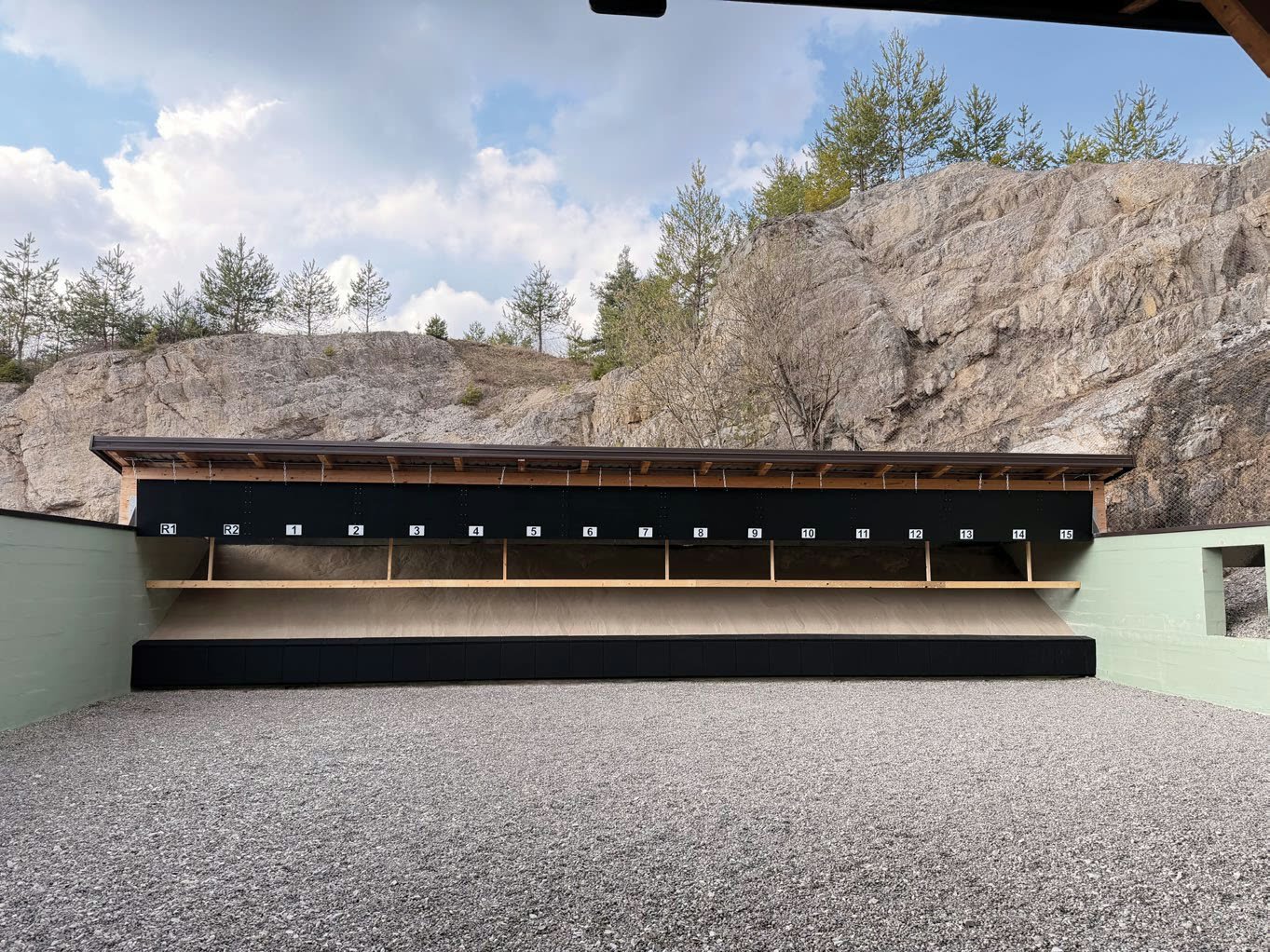
Outdoor Range — Blocks at the Backstop
A continuous course of ballistic rubber blocks runs along the base of the backstop, directly under the target line.
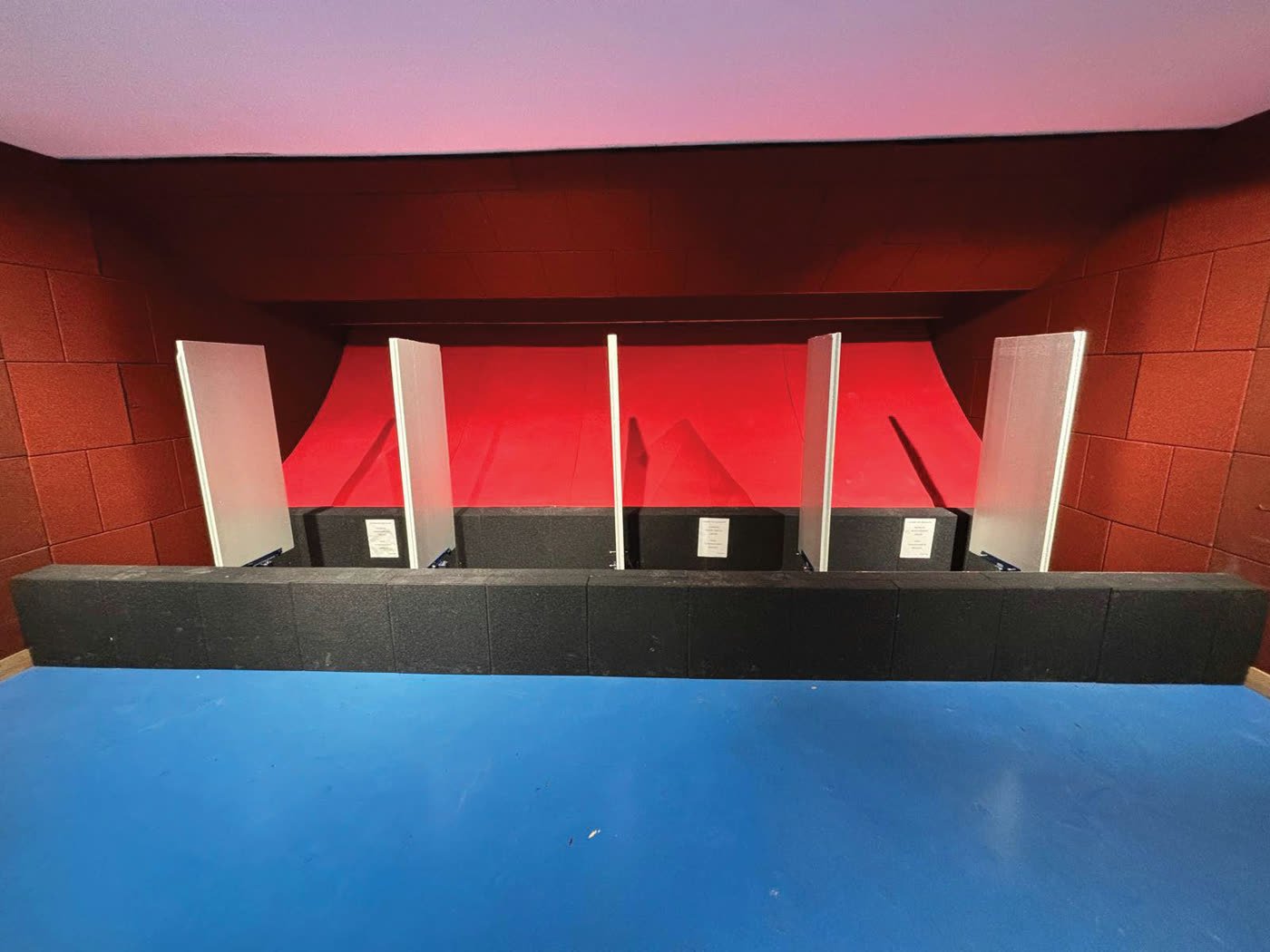
Indoor Range — Full Tile Lining
Walls and ceiling fully clad in anti-ricochet tiles, with a wall of ballistic blocks forming the bullet trap.
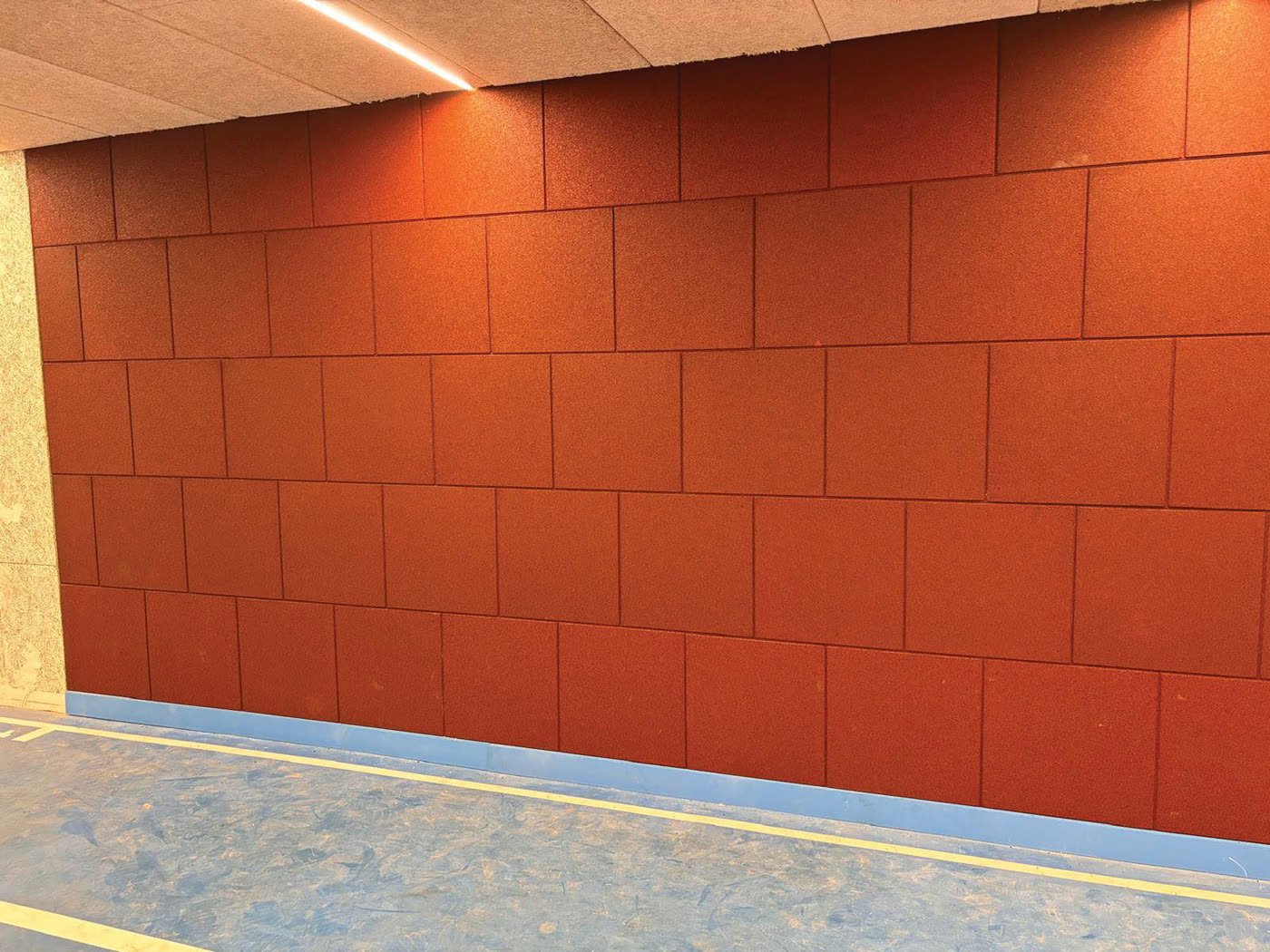
Wall Cladding — Close-Up
40 or 45 mm tiles laid in a running bond over the full wall height, up to the ceiling.
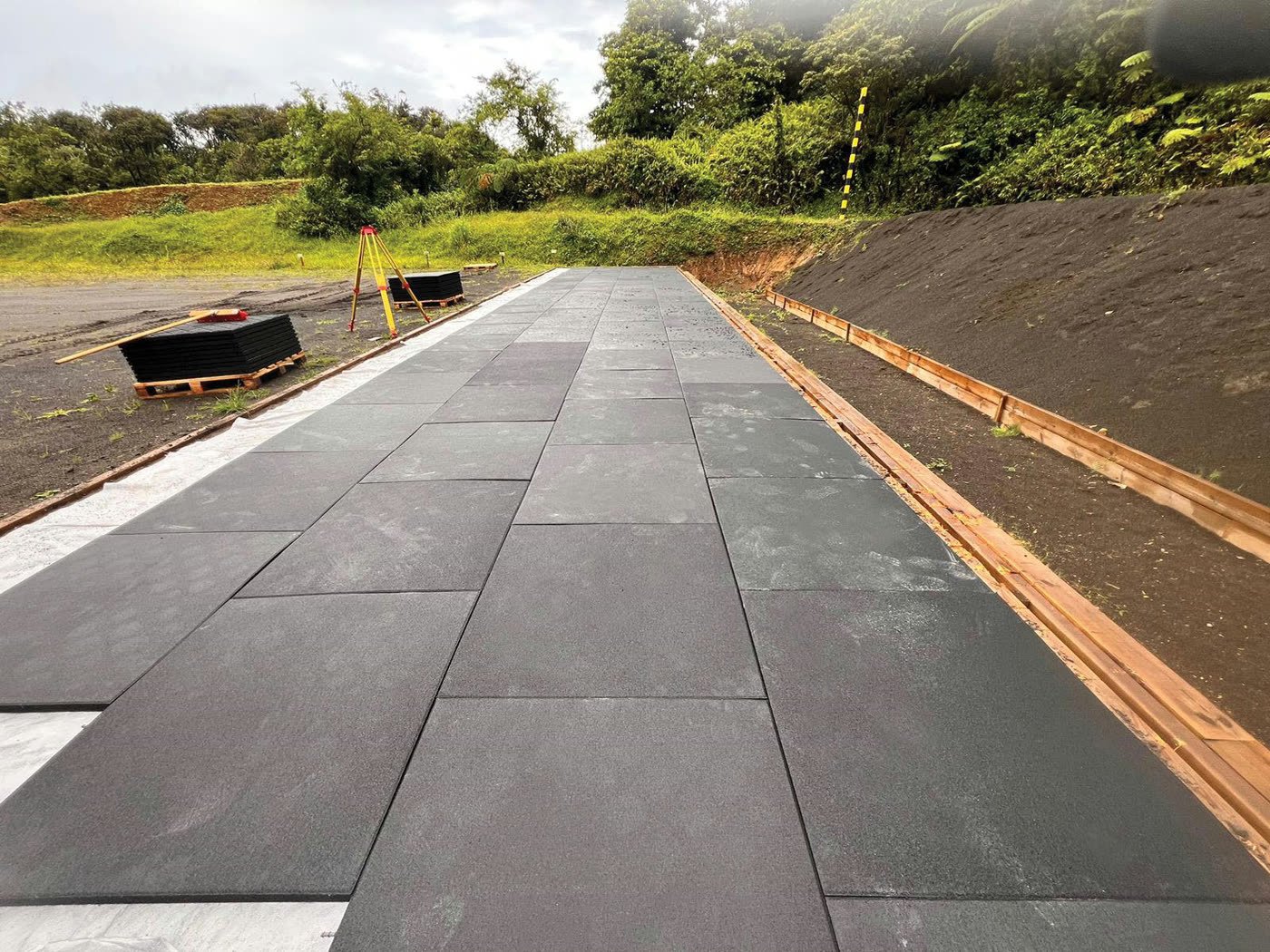
Firing Lane Surfacing
An outdoor firing lane being surfaced with the same tiles used on walls, laid over the prepared base.
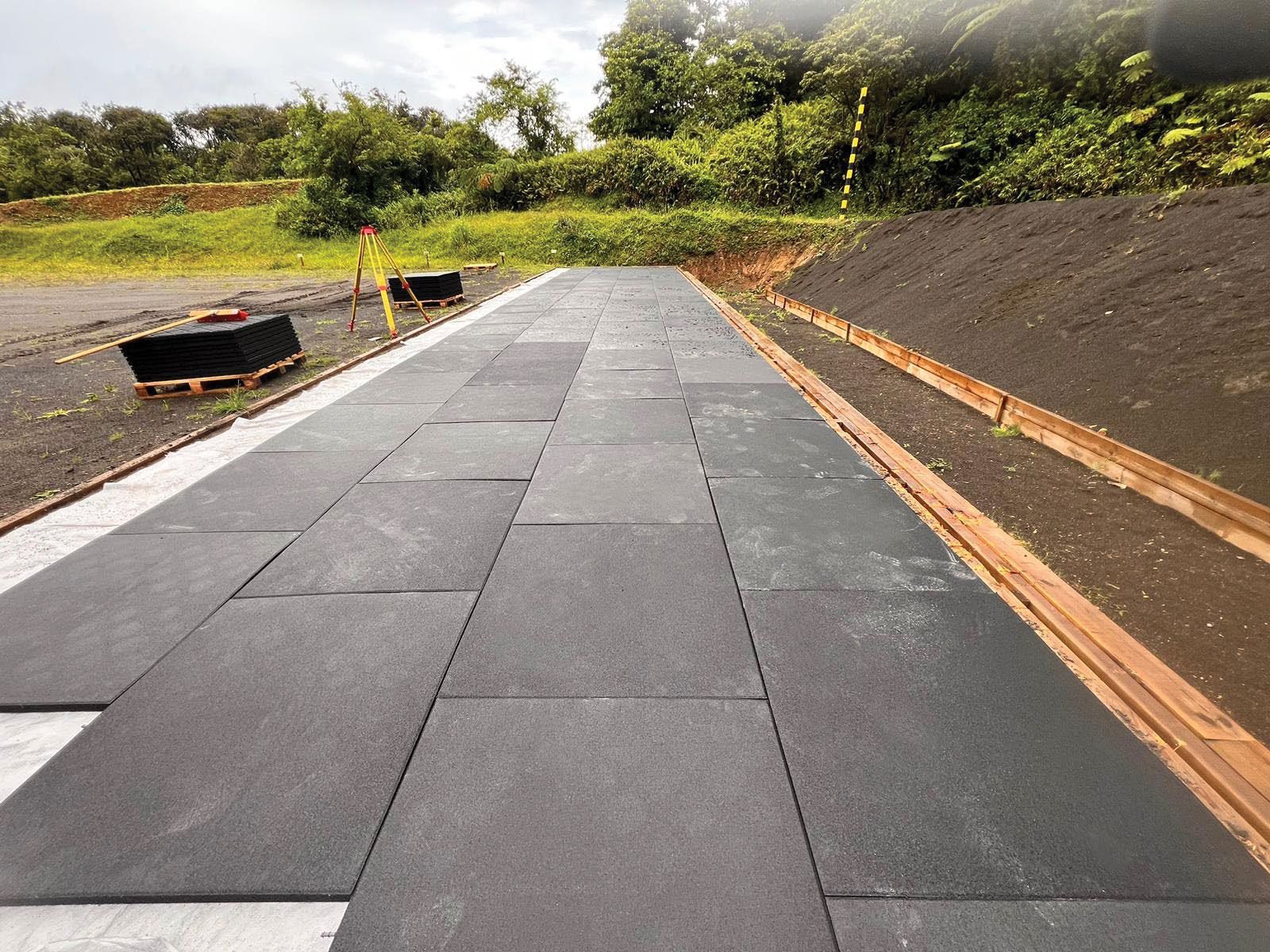
Outdoor Lane — Tile Installation
Tiles are laid directly onto the prepared firing lane base, with pallets staged on site to keep the works moving.
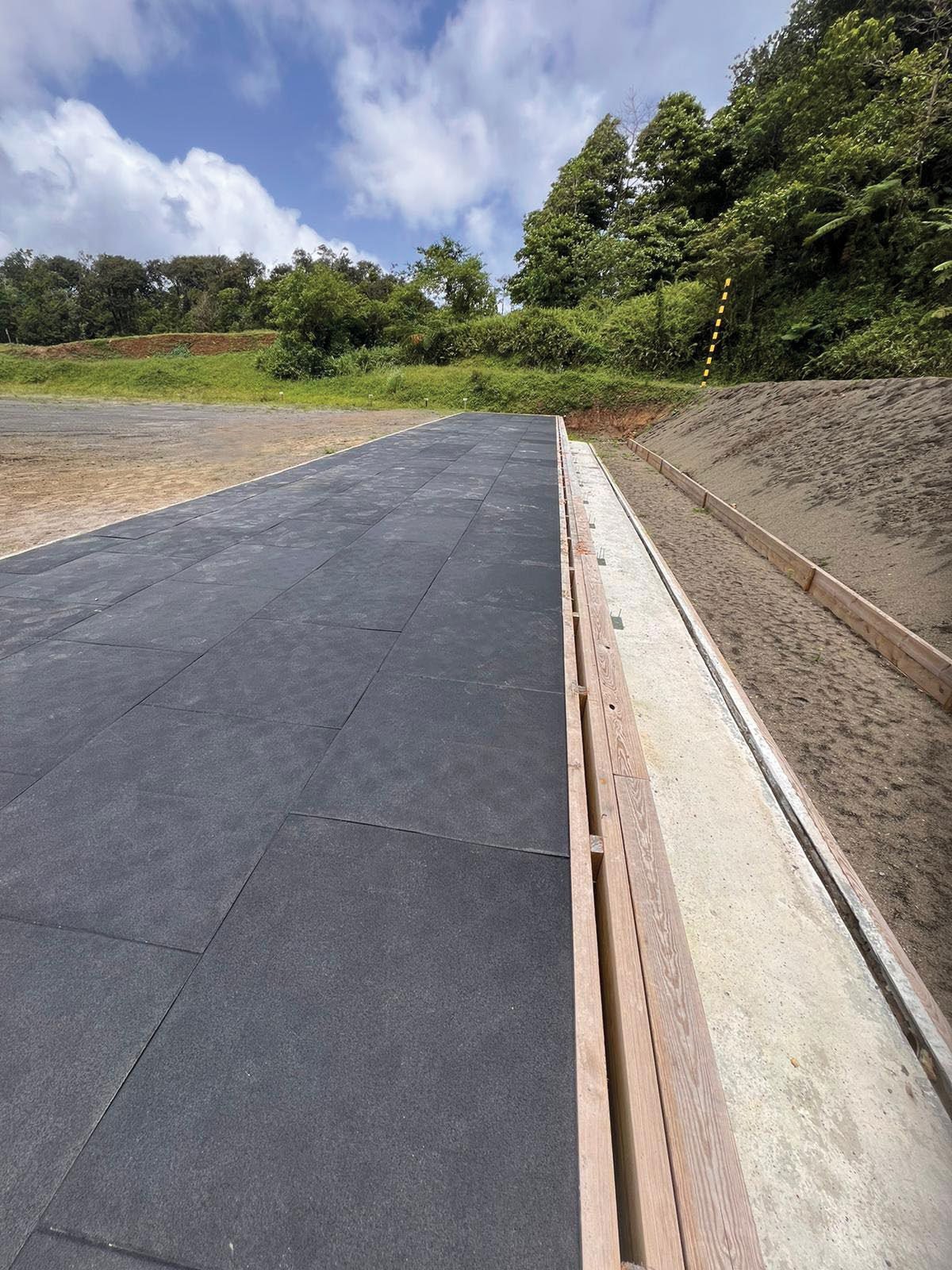
Tile Joint Detail
Formats up to 1000×1000 mm keep the number of joints low even on large surfaced areas.
25 Years of Hands-On Range Experience
Our team brings 25 years of practical, hands-on experience in range equipment and ballistic fit-out — not a claim about how long the company has been registered, but about the people specifying your project.
Installed Reference: Gunstalk Shooting Range
Our ballistic protection equipment is installed and in active use at the Gunstalk shooting range in Lithuania — a live, visitable site, not a rendering.
Services — Frequently Asked Questions
Do you only sell equipment, or can you support the whole tender?
Both. You can order bullet traps, ballistic rubber or weapon clearing stations as standalone products, or bring us in from the specification stage so the equipment side of a public tender — documentation, certificates and CPV-code matching — is handled for you.
We are a construction company that won a range contract — can you help us specify what’s needed?
Yes — this is the most common way we get involved. Send us the calibres fired and the range geometry; we return a matched specification for the ballistic lining and any weapon clearing stations required, so your team can price and schedule the fit-out with confidence.
Which CPV codes apply to a shooting range project?
Equipment (targets, bullet traps, ballistic backstop material) is typically procured under CPV 35210000. Design, technical documentation and author supervision fall under CPV 71000000. For military and defence installations, the construction or reconstruction of the range itself commonly sits under CPV 45222200. See our full CPV and tender guide for portals and worked examples.
Can you act as a subcontractor to our main contract?
Yes. We regularly work as the specialist ballistic-protection subcontractor within a larger construction or renovation contract, supplying the equipment and the documentation required for the works contractor’s own procurement file.
How do I request a proposal?
Send your technical specification, drawings and the calibres fired via the contact form. We reply with a specification-matched quotation, lead time, and the test reports, CE and fire documentation and manufacturer certifications in a form ready to attach to a procurement file.